


Finding the best option trading service is harder than it should be. The market is flooded with alert services, signal groups, and self-proclaimed gurus — each promising consistent profits, high win rates, and financial freedom. Most of them deliver a stream of context-free trade alerts that teach you nothing, and charge you monthly for the privilege of copying someone else’s trades without understanding why they were placed.
A genuinely valuable options trading service does not just tell you what to trade. It teaches you how to read the market, why specific structures work in specific conditions, and how to manage risk so that your account survives the inevitable losing streaks. That distinction — between an alert mill and an education platform — is the single most important factor in choosing where to invest your subscription dollars.
This guide covers what to look for, what to avoid, and how to evaluate whether an option trading service is worth your money before you subscribe.
What Makes the Best Option Trading Service Different
The services worth paying for share a set of characteristics that the alert mills cannot replicate.
Education is embedded in every trade. When the lead trader places a position, they explain the reasoning — not just the ticker, strike, and expiration. They explain the market context: what the gamma exposure profile looks like, where the expected move sits, what the VIX regime implies about structure width. This reasoning is the product. The trade itself is just the application.
Risk management is a first principle, not an afterthought. The best services discuss position sizing, maximum daily loss, and portfolio heat as naturally as they discuss strike selection. If a service never mentions how much of your account to risk on a trade, it is not a trading service — it is a content channel that happens to mention trades.
The community is active, not passive. In a quality service, members discuss setups, challenge assumptions, and debrief after sessions. They develop together. In an alert mill, members sit silently waiting for the next notification. The difference in learning velocity between these two environments is enormous.
The approach is specific and repeatable. “Buy calls when the chart looks bullish” is not a methodology. A defined approach — reading options order flow, identifying structural levels from dealer positioning, placing defined-risk butterfly structures at convergence targets — is a methodology. You should be able to describe the service’s approach in one paragraph. If you cannot, they do not have one.
The Alert Mill Problem: Why Most Services Fail Traders
The majority of options trading services operate on the same model: one person posts trades, subscribers copy them, and the service monetizes through monthly fees. This model is broken for everyone except the service owner.
Alerts without context create dependency. If you are copying trades without understanding the thesis, you are not learning. You are renting someone else’s judgment on a monthly basis. The moment the alerts stop — the guru takes a vacation, has a bad month, or shuts down — you are left with nothing. No framework. No edge. No ability to trade independently.
Latency destroys the edge. On 0DTE options, a trade idea has a shelf life measured in minutes. By the time an alert hits your phone, you open your broker, find the contract, and place the order, the spread has moved. The lead trader entered at $1.50. You enter at $2.30. Same trade, completely different risk-reward. Alert-based services systematically disadvantage the subscribers who pay for them.
Curated win rates hide the full picture. A service that advertises “80% win rate” is showing you the metric that looks best, not the metric that matters. A credit spread strategy can win 80% of the time and still lose money over a year because the 20% of losers are five times larger than the winners. Ask for expectancy — average gain multiplied by win rate minus average loss multiplied by loss rate. If they cannot provide it, they are marketing, not educating.
Scale ruins signal quality. A service with 10,000 subscribers sending market orders on the same contract at the same time will move the price against everyone. The lead trader fills first at the best price. The last thousand subscribers fill at the worst price. The business model creates an inherent conflict between growing the subscriber base and delivering quality fills.
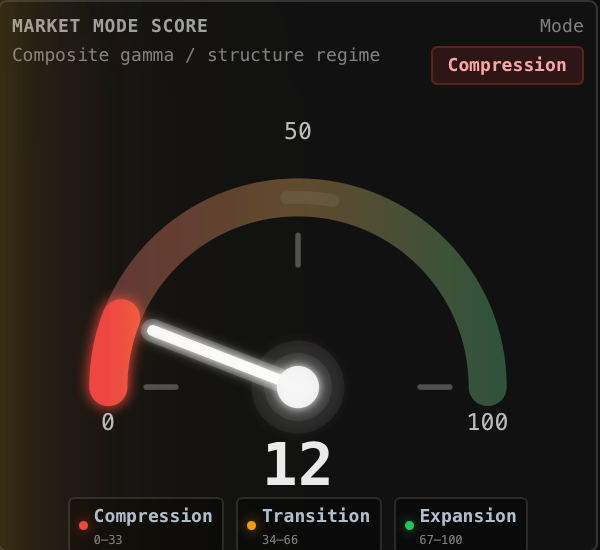
Five Things to Evaluate Before You Subscribe
Before paying for any option trading service, evaluate these five dimensions. (The FINRA options investor resource is also worth reviewing for baseline due diligence.) They separate genuine education from expensive noise.
1. Can you describe their methodology? After reading the service’s public content, can you explain what they trade, why they trade it, and how they manage risk? If the answer is “they find good trades” — that is not a methodology. Look for specifics: what instruments, what structures, what market conditions they look for, and what framework they use for entries and exits.
2. Do they show losses alongside wins? Every real trader loses. If the service’s track record is a highlight reel of winners with no mention of losses, they are curating, not reporting. The best services discuss their losing trades openly because they understand that losses are part of the process — and that analyzing losses is where the deepest learning happens.
3. Is the education separate from the alerts? A service that only provides trade alerts is a dependency machine. A service that also offers educational content — how the Greeks work, how to read gamma exposure, how to size positions relative to your account — is investing in your independence. The goal of a quality service is to make you a better trader, not to make you a permanent subscriber.
4. What does the community look like? Ask for access to the Discord or community channel before subscribing, or look for reviews that describe the interaction quality. Is it one person broadcasting? Or are members actively discussing, asking questions, and sharing their own analysis? The community quality tells you more about the service’s value than any marketing page.
5. What is the risk management framework? If the service does not explicitly address position sizing and risk management, walk away. It does not matter how good the trade ideas are if the sizing methodology will eventually blow up your account. Ask: what percentage of capital should each trade risk? What is the maximum daily loss? How are losing streaks handled? If these questions do not have clear answers, the service is incomplete.
What a Structural Trading Approach Looks Like
The most effective option trading services are not built around a charismatic lead trader’s instincts. They are built around a repeatable, structural framework that any disciplined trader can learn and execute.
Structural trading reads the market’s positioning, not its price chart. Instead of drawing trend lines and identifying “support” and “resistance” from historical price levels, structural traders read the positioning landscape — where dealers are long gamma, where they are short gamma, where open interest concentrates, and how the expected move brackets the session. These are not opinions. They are measurable, data-driven inputs.
The trade structures are defined-risk by design. A butterfly spread costs a fixed debit. That debit is the maximum loss. The potential return is 5x to 25x if price converges on the target. This asymmetry means you do not need to be right most of the time — you need to be right often enough for the math to work. A 20-30% hit rate with 10:1 average payoff is profitable. That is structural edge, not guesswork.
Every session starts with the same process. Read the GEX profile. Check the expected move. Identify the VIX regime. Locate the dealer gravity levels. Then — and only then — consider a trade. The process does not change based on how yesterday went or what financial news is saying. The framework is the same every session, which makes it teachable and learnable.

How Fly on the Wall Delivers
Fly on the Wall was built on the premise that the best option trading service is one that teaches you to trade independently — not one that makes you dependent on alerts.
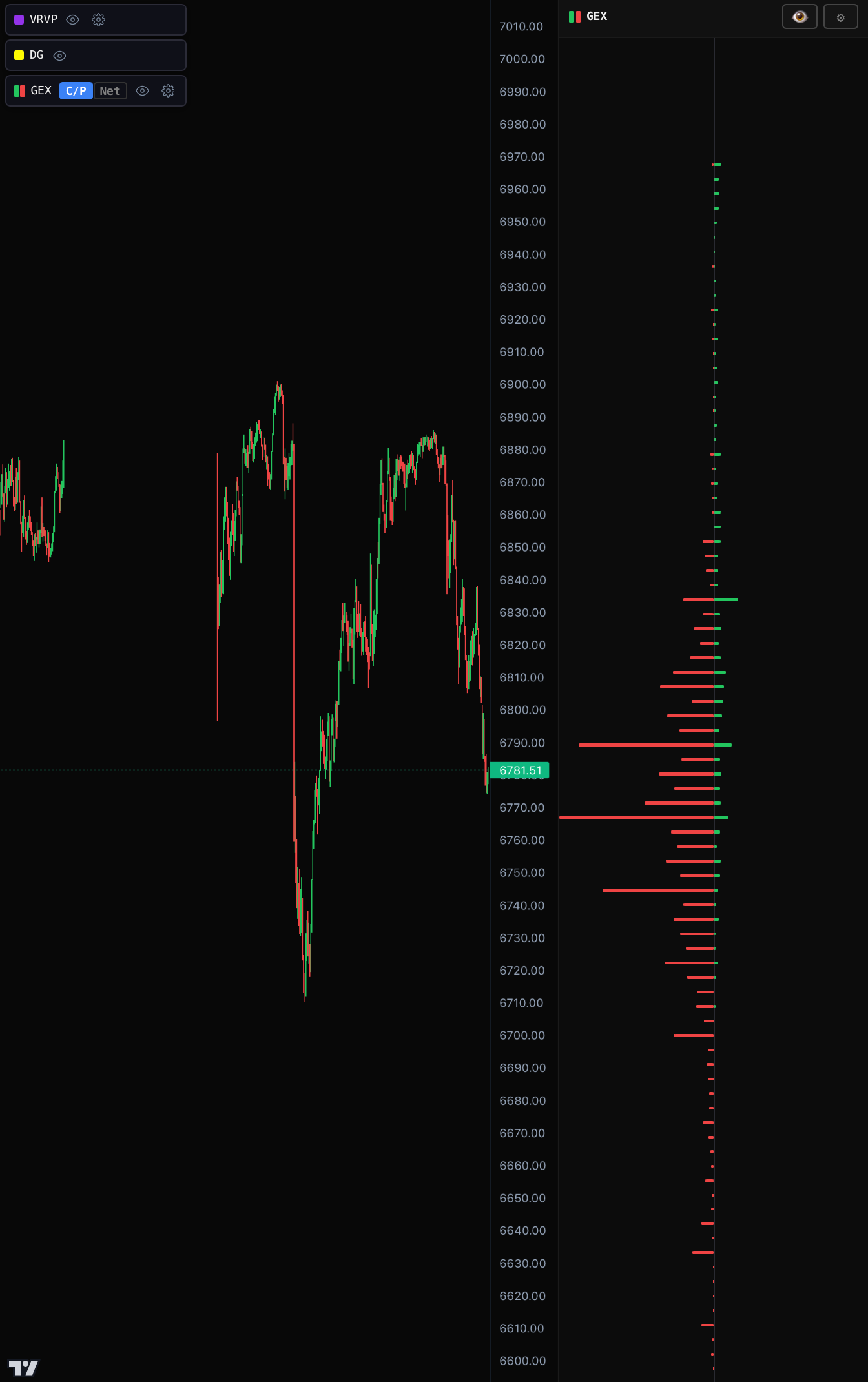
Every FOTW session starts with structural analysis, not trade ideas. Before the market opens, Ernie publishes the session’s context: GEX positioning across strikes, expected move range, VIX regime assessment, and dealer gravity levels. Members enter the session understanding the landscape — where structural pressure exists, where dealers will amplify or dampen moves, and where convergence targets sit. The analysis is the education.
Live trading sessions explain the reasoning in real time. When a 0DTE butterfly is placed, the community hears why — not just what. “GEX flipped negative below 5620, expected move decay is accelerating, and the dealer gravity level sits at 5590. Placing the butterfly there because that is where hedging flows converge.” Every trade is a lesson in reading positioning and translating it into structure.
Three membership tiers match different stages of development:
- Observer ($17/week) — Daily pre-market structural analysis, full Discord community access, and the educational blog library. The entry point for traders who want to learn the structural framework before risking capital.
- Activator ($97/month) — Everything in Observer plus the real-time GEX overlay, dealer gravity levels, full execution tools, and weekly coaching. For traders actively placing 0DTE structures alongside the community.
- Navigator ($267/month) — Everything in Activator plus daily direct coaching with Ernie. Personalized feedback on your positioning reads, structure selection, and risk management development.
The focus is narrow: SPX 0DTE structural trading. FOTW does not cover stocks, crypto, swing trades, or earnings plays. The entire community is focused on one domain — same-day expiration options on the S&P 500 — which means every member is developing expertise in the same framework. That depth of focus is what allows the community discussion to operate at a high level and what accelerates the learning curve.
The Real Cost of Choosing the Wrong Service
The subscription fee is the smallest cost of a bad option trading service. The real costs are invisible and compound over months.
Bad habits are expensive to unlearn. A service that teaches you to chase alerts, ignore risk management, and measure success by win rate is programming you with habits that will eventually destroy your account. Once those habits are embedded, unlearning them takes months of deliberate effort — time you could have spent developing the right framework from the start.
Opportunity cost is real. Every month you spend in a service that is not developing your skills is a month you could have spent learning a structural approach. At $100-300 per month, a year of the wrong service costs $1,200-3,600 in fees alone — plus the trading losses from a flawed framework, plus the income you would have earned if you had been developing genuine edge instead.
Confidence damage compounds. Traders who cycle through three or four alert services without improving often conclude that they “cannot trade” or that “the market is rigged.” The problem was never their ability — it was the service’s failure to teach. A bad service does not just waste your money. It erodes your belief that improvement is possible, which is the hardest thing to rebuild.
The right service pays for itself. A service that teaches you to manage risk properly will save you more in avoided losses within the first month than the subscription costs. A service that teaches you to read positioning and place defined-risk structures gives you a skill set that compounds over years. The question is not whether you can afford the subscription — it is whether you can afford to spend another year without a framework that works.
Frequently Asked Questions
What is the best option trading service?
The best option trading service is one that teaches a specific, repeatable methodology — not one that sends trade alerts for you to copy. Look for services that explain the reasoning behind every trade, embed risk management into the process, and maintain an active community where members develop together. The ideal service makes you a better trader over time, not a permanent subscriber dependent on someone else’s calls.
Are options trading alert services worth it?
Most alert-only services are not worth the subscription because they create dependency without developing skill. By the time an alert reaches you, the optimal entry has often passed. The real value of a trading service comes from education — understanding why trades are placed, how to read market conditions, and how to manage risk. If a service provides that context alongside its trades, it can be worth the investment. If it only provides alerts, it is usually not.
How much should an options trading service cost?
Quality options trading services typically range from $50 to $300 per month depending on the level of access and interaction. The price itself matters less than the value delivered. A $300/month service that teaches you a repeatable framework and saves you from one blown trade per quarter is cheaper than a $50/month alert service that does nothing for your development. Evaluate cost relative to the education and risk management framework provided.
What should I look for in an options trading advisory service?
Look for five things: a clearly defined methodology you can describe in one paragraph, transparent reporting of both wins and losses, educational content that exists separately from trade alerts, an active community where members interact and learn together, and an explicit risk management framework with specific guidance on position sizing and maximum loss per trade. If any of these are missing, the service is incomplete.
Is Fly on the Wall an options trading service?
Yes. Fly on the Wall is a structural options trading education platform focused exclusively on 0DTE SPX options. Every membership tier includes daily pre-market structural analysis, full Discord community access, and the educational blog library. Higher tiers add real-time tools including the GEX overlay, dealer gravity levels, and direct coaching with Ernie. FOTW teaches traders to read positioning and place defined-risk structures — it is built for independence, not alert dependency. Compare membership tiers here.
Choose a Service That Teaches You to Trade
The best option trading service is not the one with the flashiest marketing or the highest advertised win rate. It is the one that gives you a framework you can execute independently — a methodology for reading the market, a structure for managing risk, and a community that holds you accountable to the process.
If structural 0DTE trading on SPX resonates with how you want to approach the market, start with Observer ($17/week) and see the framework in action before committing further. Step up to Activator ($97/month) when you are ready for real-time tools and live execution. Or go directly to Navigator ($267/month) for daily coaching with Ernie. Compare all plans here.