Fly on the Wall
Blog
Trading insights, strategy breakdowns, and lessons from the options trenches.



Fly on the Wall
Trading insights, strategy breakdowns, and lessons from the options trenches.
The iron butterfly is the most misunderstood structure in options trading. It looks like an iron condor. It trades like a butterfly. And for 0DTE traders who understand [...]
Read MoreIV crush is the single most destructive force in options trading for anyone selling premium. It is the sudden collapse of implied volatility — and with it, the [...]
Read More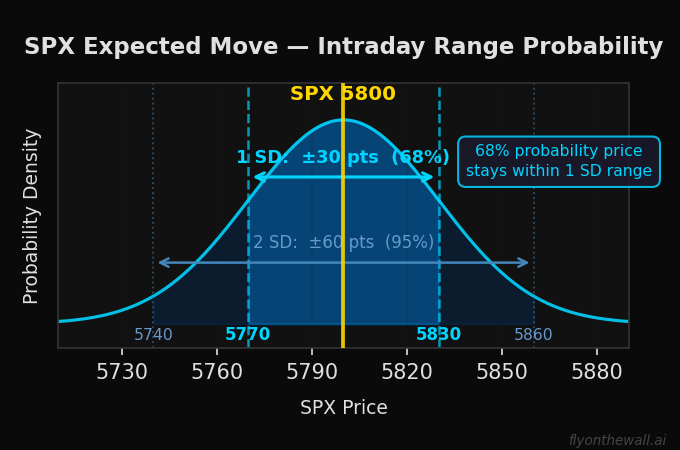
The expected move is the single most practical number in options trading. It tells you how far the market is pricing a stock or index to move during [...]
Read More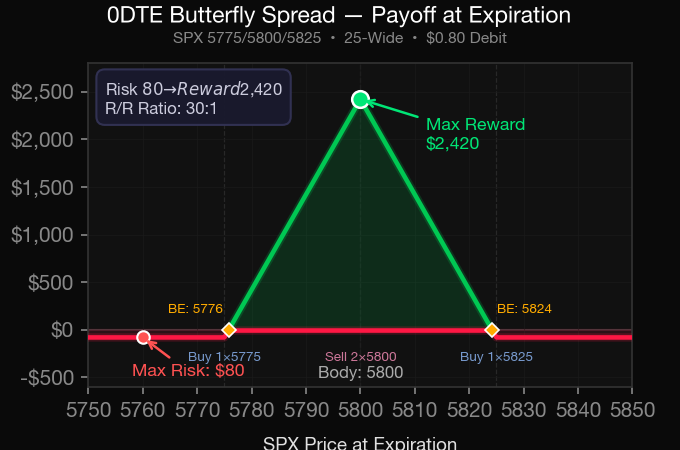
The 0DTE butterfly strategy is the single most asymmetric structure available on same-day expiration options. You risk a small, defined debit — typically $40 to $150 — and [...]
Read More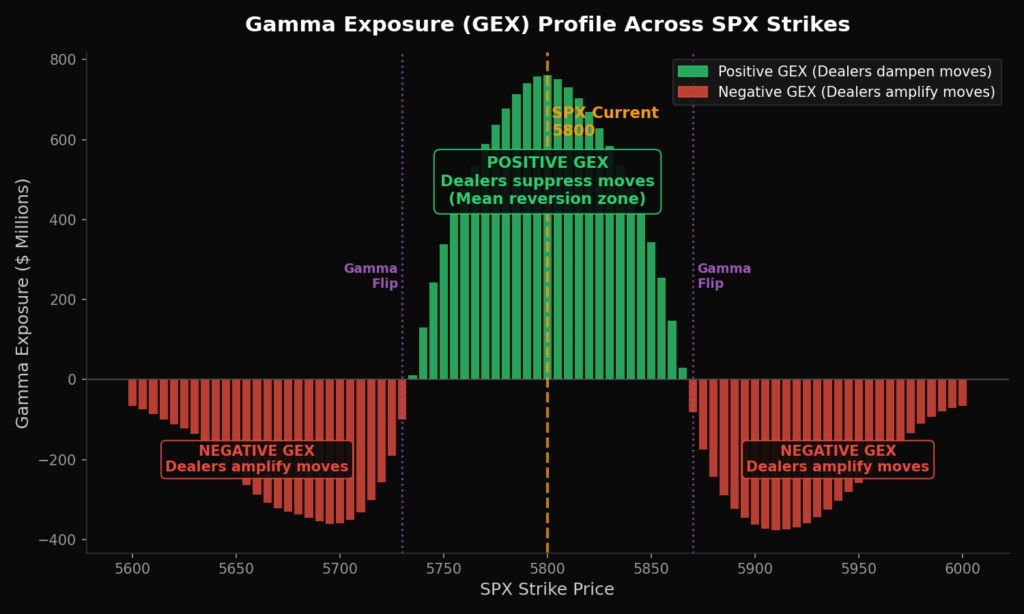
Gamma exposure is the single most important piece of market structure data that most traders have never heard of. It tells you whether the market is set up [...]
Read More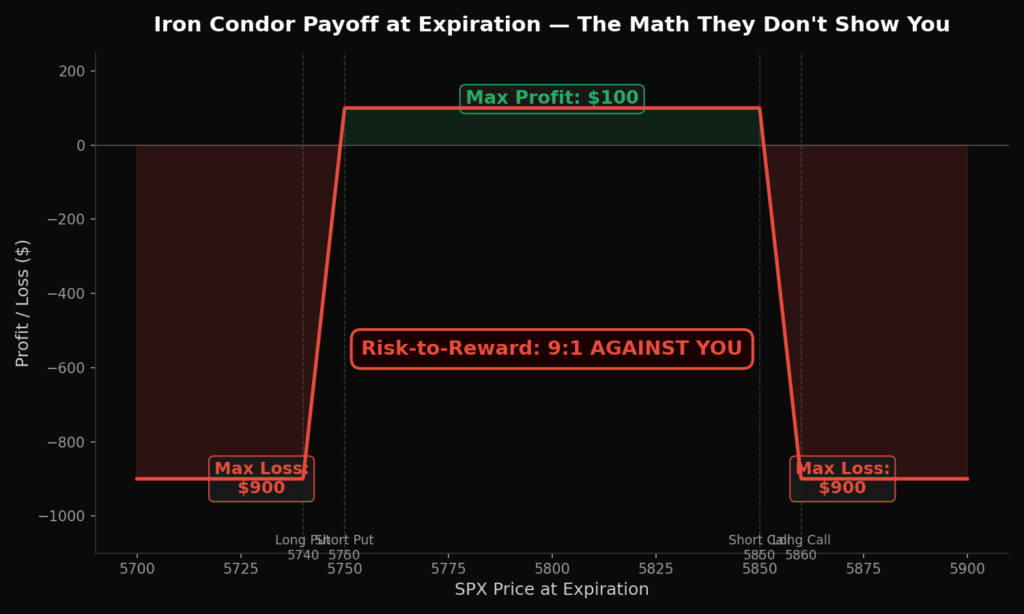
The iron condor options strategy is one of the most popular structures in retail options trading. It is also one of the most misunderstood — especially when applied [...]
Read More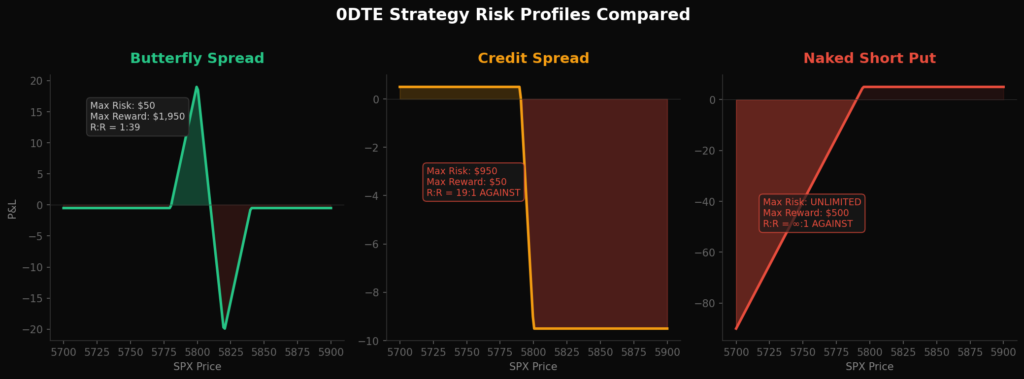
0DTE options — zero days to expiration — are options contracts that expire on the same day you trade them. You buy them in the morning. They settle [...]
Read More
SPX options are the professional standard for trading the S&P 500. Whether you’re placing 0DTE butterflies, selling credit spreads, or hedging a portfolio, SPX options offer structural advantages [...]
Read MoreIf you trade 0DTE options, the SPX vs SPY decision isn’t a preference — it’s a structural choice that affects your taxes, your fills, your risk, and your [...]
Read More
The 0DTE butterfly strategy is the closest thing options trading has to an unfair advantage. You risk $40 to $150 per trade. Your potential return is 5 to [...]
Read More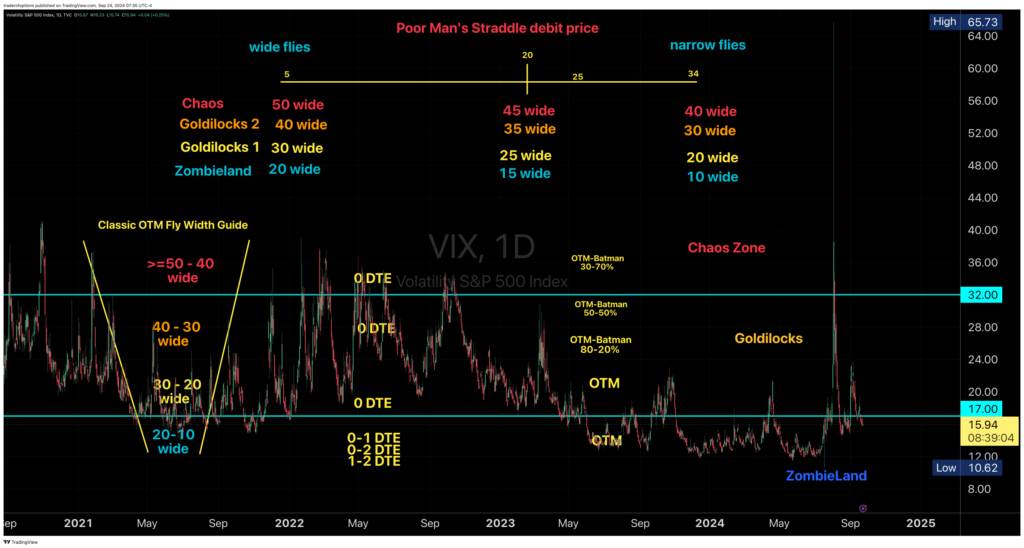
The 0DTE long butterfly is one of the most misunderstood strategies in options trading. For decades, traders have been taught to use it as a market-neutral strategy — [...]
Read More