


Most options trading education is built backwards. It starts with the mechanics — what is a call, what is a put, how does expiration work — and then jumps straight to strategies. Buy calls when you are bullish. Sell puts if you want income. Maybe try a spread once you feel ready. The result is a trader who understands the vocabulary but has no framework for reading the market, managing risk, or placing trades with structural edge.
The gap between knowing what options are and knowing how to trade them profitably is enormous. That gap is where most traders lose money — and where the right options trading education makes all the difference. This guide covers what a serious learning pathway actually looks like, what most programs get wrong, and how to evaluate whether an education platform is worth your time and money.
What Most Options Trading Education Gets Wrong
The standard curriculum for options education follows a predictable pattern: definitions, payoff diagrams, basic strategies, then “practice on paper.” This sequence teaches options as an academic subject. Trading options profitably is not an academic exercise.
Starting with strategy before context is the foundational mistake. A new trader learns about credit spreads and immediately starts selling them — without understanding the volatility regime, dealer positioning, or where the expected move sits. They win several times because credit spreads have high win rates. Then a single outsized loss wipes out weeks of gains. The strategy was fine. The context was missing. No one taught them when to deploy it and when to sit out.
Teaching indicators instead of market structure creates false confidence. Moving averages, RSI, MACD, and Bollinger Bands were built for equity price analysis. SPX intraday price action is driven primarily by options order flow and dealer hedging — forces that do not appear on a candlestick chart. A trader who learns RSI as their primary decision tool will apply it to SPX and wonder why the signals fail. The indicators are not broken. They are measuring the wrong thing.
Ignoring risk management until “later” guarantees blowups. Most programs treat position sizing and max loss rules as an advanced topic — something you learn after you have the strategies down. In practice, risk management is the only thing that keeps you in the game long enough for the strategies to work. A trader with a mediocre strategy and excellent risk management will outperform a trader with a brilliant strategy and no risk rules every time.
Emphasizing win rate over expectancy misleads beginners. New traders are drawn to strategies with 70-80% win rates because winning feels good. But a strategy that wins 80% of the time and loses 4x the average win on each loss is a losing strategy. Proper education teaches expectancy — the combination of win rate and payoff ratio that determines whether a strategy makes money over hundreds of trades. If your program never mentions expectancy, it is teaching entertainment, not trading.
The Learning Pathway That Actually Works
Effective options trading education follows a specific sequence. Each stage builds on the previous one, and skipping stages creates gaps that cost real money later.
Stage 1: Understand market structure before touching a strategy. Before learning any options strategy, a trader needs to understand how the market they are trading actually works. For SPX options, that means understanding what moves price intraday — not earnings reports or economic narratives, but dealer gamma exposure, hedging flows, and the positioning landscape. The options market structure guide covers this foundation. Without it, every strategy decision is a guess.
Stage 2: Learn the Greeks as practical tools, not textbook definitions. Delta, gamma, theta, and vega are not exam topics. They are the dashboard instruments that tell you how your position will behave in real time. Delta tells you your directional exposure. Gamma tells you how fast that exposure changes. Theta tells you how much time is costing you. Vega tells you what happens if volatility shifts. Learning these as practical inputs — not abstract formulas — is what separates traders who understand their positions from traders who are surprised by them.
Stage 3: Move from directional bets to defined-risk structures. Buying calls because you think the market will go up is not a strategy — it is a bet. The transition to defined-risk structures like butterfly spreads is where trading becomes systematic. A butterfly has a known maximum loss (the debit), a specific target (the center strike), and an asymmetric payoff (5x to 25x the risk). This structure transforms trading from “I hope I am right” to “I have a thesis, a defined risk, and a measurable edge.”
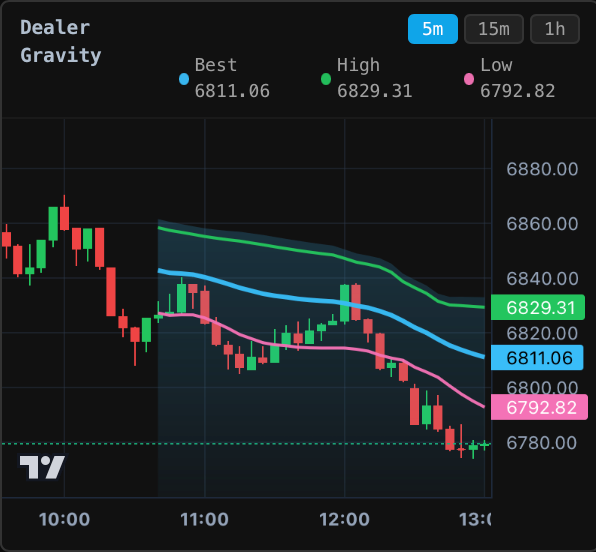
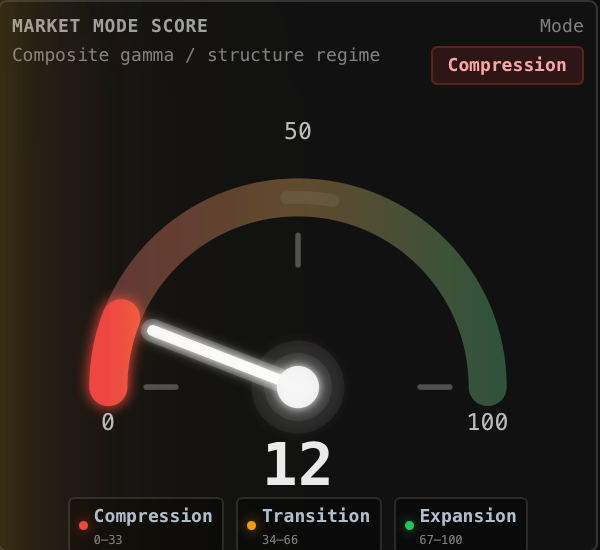
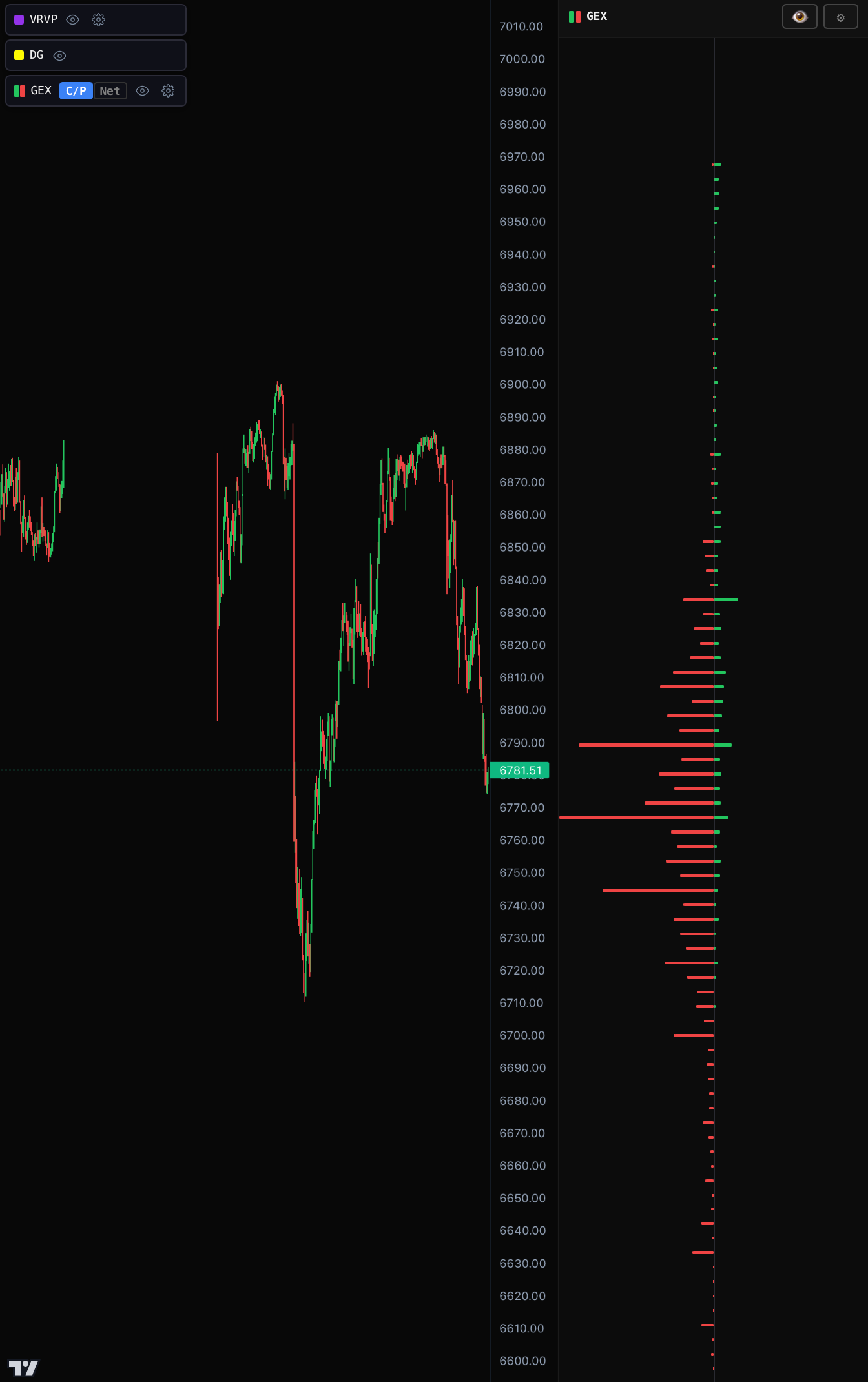
Stage 4: Read positioning and session context before every trade. This is where the full framework comes together. Before placing any trade, read the GEX profile to understand the dealer hedging regime. Check the expected move to define the session range. Assess the VIX level to calibrate structure width. Identify dealer gravity levels where positioning concentrations will attract price. Then place your 0DTE structure at the convergence target. Every session, same process. That consistency is what makes the approach teachable — and profitable.
Stage 5: Build the risk management discipline that makes everything sustainable. Position sizing rules (1-2% of account per trade), session max loss limits, and the psychological discipline to stop trading after hitting those limits. This stage is not learned once — it is practiced and reinforced across hundreds of sessions until it becomes automatic.
Free vs Paid: What Each Level Delivers
The question is not whether free options trading education exists — it does, abundantly. The question is what free resources can and cannot teach you, and where paid education fills the gaps.
Free resources excel at teaching definitions and mechanics. YouTube, OCC’s options education portal, broker-provided courses, and blog content (including this one) can teach you what a call is, how expiration works, and what the basic strategies look like. This foundational knowledge is genuinely free and widely available. There is no reason to pay for someone to explain what a put option is.
Free resources struggle with context, application, and feedback. A YouTube video can explain a butterfly spread. It cannot tell you whether today’s GEX profile supports placing one, where to set the center strike, or what width to use given the current VIX regime. Application requires real-time context — and that context changes every session. No static resource can provide it.
Paid education becomes valuable when it provides a live framework. The value of a quality paid program is not the strategy content — it is the daily application of that content to live markets. Pre-market analysis that reads the session context. Real-time discussion that shows how experienced traders translate positioning data into trade decisions. Post-session debriefs that analyze what worked and what did not. This live framework is what free education cannot replicate.
The worst paid programs are alert services disguised as education. If the primary deliverable is trade alerts — “buy this butterfly at this strike” — you are not receiving education. You are renting someone else’s judgment. The best option trading services teach you to fish. The worst ones sell you a fish every morning and call it a cooking class.
How to Evaluate an Options Education Program
Before spending money on any program, run it through these five filters. They will eliminate 90% of the noise.
1. Can you identify the methodology? Read the program’s free content. Watch their videos. After an hour, you should be able to describe their approach in one paragraph: what they trade, how they read the market, what structures they use, and how they manage risk. If you cannot — if the approach is vague, personality-driven, or changes with every video — there is no methodology to learn.
2. Is risk management built into the curriculum? Position sizing, maximum daily loss, and drawdown management should appear early and often — not as an afterthought. If the program teaches strategies for six weeks before mentioning how much to risk per trade, it has the priorities backwards.
3. Does the program show losses? Every real trader loses regularly. A program that only shows winning trades is marketing, not education. The most valuable educational content often comes from loss analysis — understanding why a trade failed and what the positioning data said in hindsight.
4. Is there an active community? Learning to trade in isolation is possible but slow. An active trading community where members discuss setups, challenge assumptions, and debrief sessions together accelerates the learning curve dramatically. Look for communities where members interact — not where they passively wait for alerts.
5. Does it teach independence or dependency? The goal of quality education is to make you a self-sufficient trader. After six months, you should be able to read the market, identify setups, manage risk, and execute trades without relying on the program’s daily calls. If the business model depends on you never learning to trade independently, the incentives are misaligned.
How FOTW Structures Options Trading Education
Fly on the Wall was built around the premise that options trading education should produce independent traders — not permanent subscribers who cannot function without daily alerts.
The curriculum follows the structural pathway. FOTW teaches market structure first, then Greeks as practical tools, then defined-risk structures, then live positioning analysis. The educational blog library covers every stage of this progression — from what 0DTE options are to how to day trade SPX options using structural analysis. The learning path is deliberate, sequential, and cumulative.
Every session is a live classroom. Before the market opens, Ernie publishes the session’s structural context: GEX positioning, expected move range, VIX regime, and dealer gravity levels. During the session, the community discusses how positioning evolves and how trades are placed in response. This is not an alert service — it is option trading education delivered in real time, where every trade decision is explained as it happens.
Three tiers match different stages of development:
- Observer ($17/week) — Daily pre-market structural analysis, full Discord community access, and the complete educational blog library. The starting point for traders building their structural foundation.
- Activator ($97/month) — Everything in Observer plus the real-time GEX overlay, dealer gravity levels, execution tools, and weekly coaching sessions. For traders actively placing 0DTE structures alongside the community.
- Navigator ($267/month) — Everything in Activator plus daily direct coaching with Ernie. Personalized feedback on your positioning reads, structure selection, and risk management development.
The focus is exclusively on SPX 0DTE structural trading. FOTW does not try to teach everything about options. It teaches one domain deeply — same-day expiration options on the S&P 500, traded through the structural lens of dealer positioning and defined-risk butterflies. That narrow focus is what allows the community to operate at a high level and what makes the education genuinely transferable.
Frequently Asked Questions
What is options trading education?
Options trading education is the process of learning how to trade options contracts — from the basic mechanics of calls and puts through advanced topics like market structure, dealer positioning, and risk management. Quality education goes beyond definitions to teach a specific, repeatable methodology for reading the market, selecting structures, and managing risk across hundreds of sessions.
Is options trading education worth it?
It depends entirely on the quality of the program. Education that teaches a repeatable framework, embeds risk management from day one, and provides live application in real markets is worth far more than the subscription cost — it saves you from the losses you would accumulate learning through trial and error alone. Education that only provides trade alerts without context is rarely worth the money.
Can you learn options trading for free?
You can learn the fundamentals of options trading for free through broker resources, the OCC’s education portal, YouTube, and blog content. What free resources cannot provide is live application — daily analysis of real market conditions, real-time trade decision-making, and personalized feedback on your development. The basics are free. The framework for applying them profitably usually is not.
What is the best way to learn options trading?
The most effective approach follows a specific sequence: learn market structure first, then the Greeks as practical tools, then defined-risk structures, then live positioning analysis. Each stage builds on the previous one. Pair this progression with an active trading community where you can discuss setups, analyze losses, and develop alongside other traders at similar stages.
How long does it take to learn options trading?
The basic mechanics can be learned in a few weeks. Developing a repeatable framework for live trading typically takes three to six months of consistent study and practice. Becoming consistently profitable — where your process is internalized and your risk management is automatic — usually requires six to twelve months of active trading with deliberate improvement. The timeline compresses significantly with structured education and an engaged community.
Start Learning the Right Way
The difference between traders who eventually become profitable and those who cycle through strategy after strategy is not talent. It is the quality of the education they started with. A structural framework — one that teaches you to read the market’s positioning, place defined-risk trades at convergence targets, and manage risk systematically — is the foundation that everything else builds on.
If you want to learn the structural approach to 0DTE SPX options, start with Observer ($17/week) for daily structural analysis and full community access. Move to Activator ($97/month) when you are ready for real-time GEX tools and weekly coaching. Or begin with Navigator ($267/month) for daily direct coaching with Ernie. Compare all plans here.