


Options trading for beginners is taught backwards almost everywhere. The standard approach starts with definitions — calls, puts, strike prices, expiration dates — and then immediately jumps to strategies. Buy calls when bullish. Sell puts for income. Try a spread when you feel confident. It sounds logical, but it skips the layer that actually determines whether you make money: understanding what moves options prices and how to manage the risk of being wrong.
This guide takes a different approach to options trading for beginners. Instead of starting with a glossary and ending with a strategy menu, it starts with the structural reality of how options markets work — the forces that actually drive price — and builds from there. If you are new to options, this is the foundation that separates traders who develop real skill from traders who cycle through strategies hoping the next one works.
What Options Are — And What Actually Moves Their Price
An option is a contract that gives you the right to buy (call) or sell (put) an asset at a specific price (strike) by a specific date (expiration). That is the textbook definition, and it is correct. But it tells you almost nothing about how to trade profitably.
What moves options prices is not just the underlying asset. Yes, when SPX goes up, call options tend to increase in value. But the option’s price is also driven by time remaining (theta), the speed of the underlying move (gamma), and the market’s expectation of future volatility (implied volatility). These forces — collectively called the Greeks — interact in ways that surprise beginners constantly. A trader buys a call, the market goes up, and the call loses money because implied volatility collapsed faster than the directional move helped. This is not a rare scenario. It happens regularly, and it is why understanding the Greeks early is not optional.
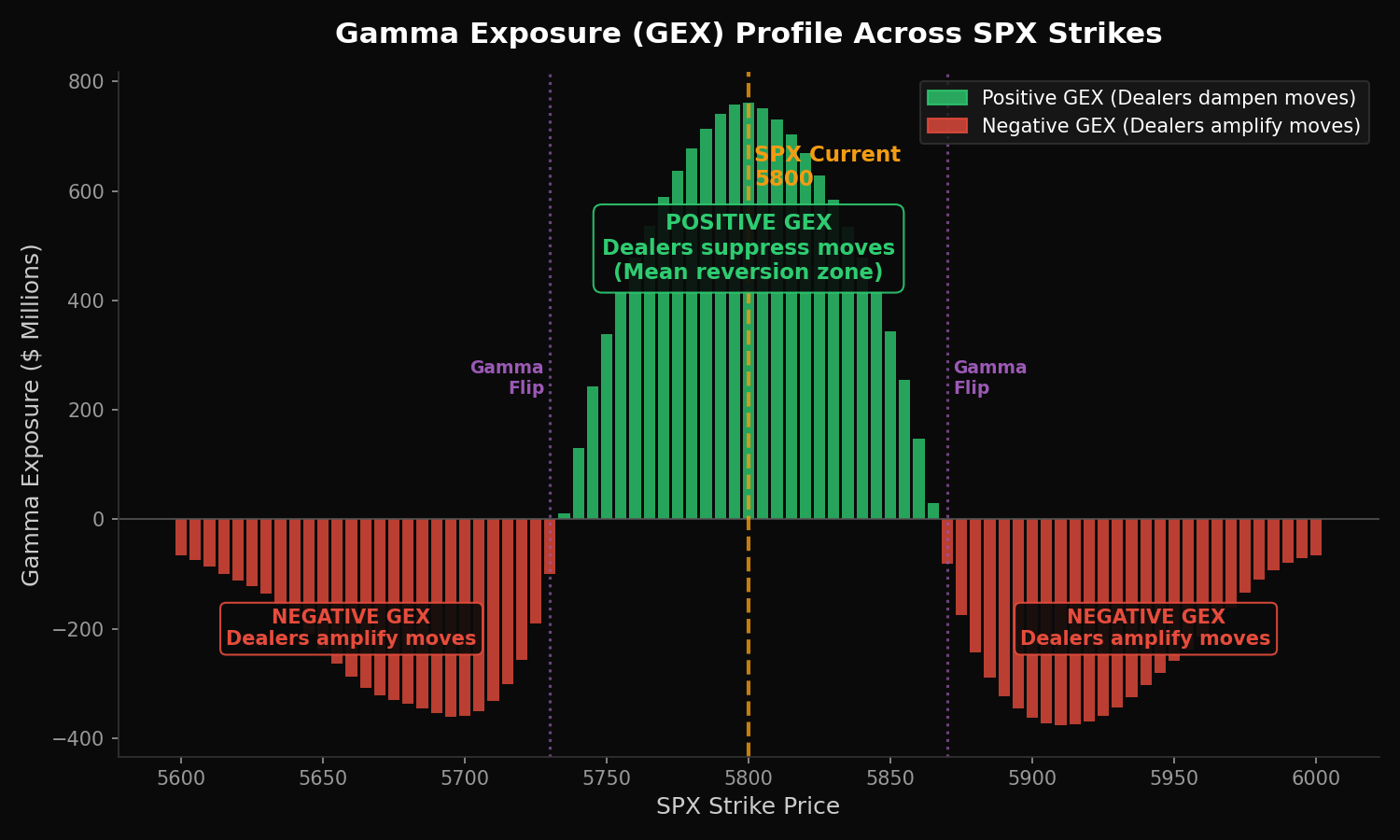
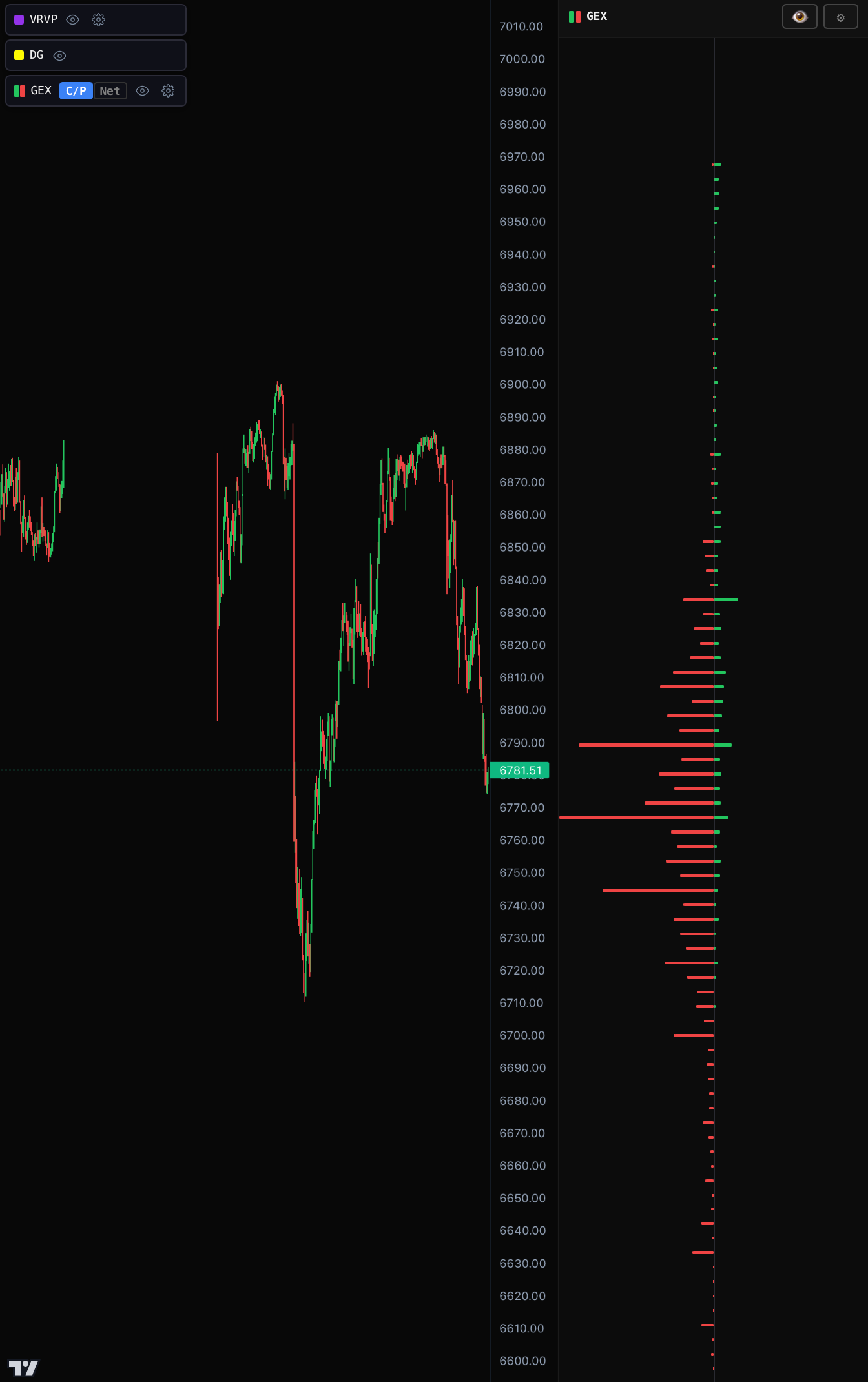
Options create positioning that moves the market itself. This is the insight that most beginner resources never mention. When thousands of options contracts are bought and sold at specific strikes, the dealers who take the other side must hedge. That hedging — buying or selling the underlying asset to offset their options exposure — creates real buying and selling pressure that moves price. The concept is called gamma exposure (GEX), and it is the single most important structural force in intraday markets like SPX. Understanding that options flow creates price movement, not just responds to it, is the paradigm shift that separates structural traders from everyone else.
Cash-settled index options are different from stock options. Most beginner guides teach options using stock examples — buying calls on Apple, selling puts on Tesla. SPX options are fundamentally different: they are cash-settled (no shares change hands), European-style (cannot be exercised early), and receive favorable Section 1256 tax treatment. If you plan to trade index options — and for structural trading, they are superior — you need to understand these differences from the start.
The Five Mistakes That Cost Beginners the Most
These are not theoretical risks. They are the specific, predictable mistakes that make options trading for beginners so expensive during the first six months. Every experienced trader has made at least three of them.
1. Buying naked calls or puts as a first strategy. It feels intuitive — you think the market will go up, so you buy a call. But a naked long option fights theta (time decay) every second, requires a directional move large enough to overcome the premium paid, and loses 100% of its value if it expires out of the money. The probability of profit on a single out-of-the-money call is typically 25-35%. Starting with this strategy teaches beginners that options trading is gambling, because with this approach it effectively is.
2. Ignoring time decay until it has already destroyed the position. Theta is not a background force. On 0DTE options, it is the dominant force — the option loses value every minute regardless of what the underlying does. Beginners who buy options without calculating how much time decay will cost them per hour are entering a position without knowing the carrying cost. It is like renting an apartment without asking the monthly rent.
3. Not understanding implied volatility crush. Before major events — earnings, FOMC, CPI — implied volatility inflates, making options more expensive. After the event, volatility collapses even if the underlying moves in the expected direction. Beginners buy options before events expecting a big payout, and discover that the volatility crush erased most of the value even though they were “right” on direction. This is not a bug. It is how options pricing works, and it must be understood before trading around events.
4. Oversizing positions relative to account capital. A beginner with a $5,000 account buys $500 worth of options on a single trade — 10% of their capital on one bet. Two losing trades later, they have lost 20% and are emotionally compromised. Proper risk management means risking 1-2% of your account per trade. On a $5,000 account, that is $50-100 per position. This feels small, but it is what keeps you in the game through the inevitable losing streaks that every strategy produces.
5. Trading without a defined process. Opening a broker, scanning for “active options,” and buying whatever looks interesting is not a process. A process means: reading the market context before the open, identifying specific conditions that support a trade, choosing a structure that matches those conditions, and defining the exact exit criteria before entering. The process does not need to be complex. It needs to exist, and it needs to be followed every session.
The Learning Sequence That Builds Real Skill
There is a natural order to learning options trading for beginners that most programs ignore. Each stage builds on the previous one, and skipping stages creates blind spots that cost real money later. The full progression is covered in the options trading education guide, but here is the condensed version.
Stage 1: Learn the mechanics, but do not stop here. Understand what calls and puts are, how strike prices and expiration dates work, how options are quoted, and how to read an options chain. This is foundational and can be learned in a few days from free resources. The trap is spending months here, watching YouTube explainers on repeat, without moving to application.
Stage 2: Understand the Greeks as your position dashboard. Delta tells you how much your position moves per dollar of underlying movement. Gamma tells you how fast delta changes. Theta tells you how much time is costing you. Vega tells you your exposure to volatility shifts. These are not exam topics — they are the instruments you will read every time you have an open position. Learn them practically, not theoretically.
Stage 3: Learn market structure before learning strategies. This is where most beginner paths fail. Before you learn any spread or strategy, understand what moves the market you are trading. For SPX, that means understanding options order flow, dealer hedging, gamma exposure, and the expected move. Once you understand these structural forces, strategy selection becomes obvious — you choose the structure that matches the regime, not the one that sounded good in a video.
Stage 4: Start with defined-risk structures, not directional bets. Your first real trades should be debit spreads or butterfly spreads — positions where maximum loss is known before entry. These structures teach you to think in terms of risk-reward ratios and probability, not hope and fear. They also protect your account from the catastrophic single-trade losses that end most beginners’ careers.
Stage 5: Apply everything in a live environment with strict risk rules. Paper trading has limited value because it removes the emotional component that drives most mistakes. Start with small real positions — $25-50 risk per trade — and focus on executing the process correctly, not on the profit or loss of individual trades. The goal of the first three months is building the habit of reading context, placing defined-risk trades, and following risk management rules. Profitability comes from the process, not from any individual trade.
Options Trading for Beginners: Strategies That Actually Make Sense
The internet is full of strategy lists — iron condors, jade lizards, strangles, ratio spreads. A beginner does not need a menu of twenty strategies. They need one or two that match their current skill level and market understanding.
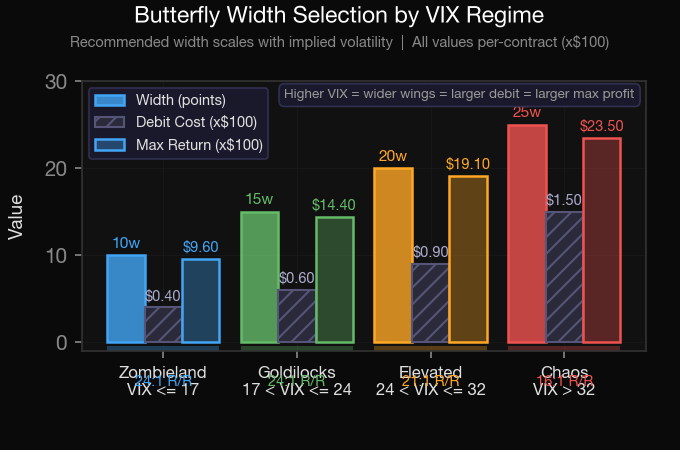
The butterfly spread is the ideal starting structure. A butterfly costs a small, fixed debit. That debit is the maximum possible loss. If price reaches the target (the center strike), the return is 5x to 25x the risk. This asymmetric payoff structure means you do not need to be right most of the time — you need to be right often enough for the math to work. A 20-30% hit rate with a 10:1 average payoff is a profitable strategy. That is a fundamentally different framework from buying calls and hoping, and it is accessible to beginners from day one.
Debit spreads teach directional trading with defined risk. A bull call spread — buying a call and selling a higher-strike call — caps your maximum loss at the net debit while giving you directional exposure. It costs less than a naked call, decays more slowly (because you are also collecting theta on the short leg), and has a higher probability of profit. For beginners who want directional exposure while learning, debit spreads are structurally superior to naked options in every dimension.
Avoid credit spreads until you understand why they fail. Credit spreads are popular in beginner courses because they win 70-80% of the time. That high win rate creates false confidence. When they lose, they lose several times the credit received. A beginner who sells twenty credit spreads, wins sixteen, and loses four may discover that the four losses erased all the gains and then some. Credit spreads are a legitimate strategy — but they require a deep understanding of when the conditions favor them and when they do not. That understanding comes later, not first.
Start on SPY, migrate to SPX when the math supports it. SPY options are 1/10th the notional size of SPX, which means a butterfly costs $15-30 instead of $150-300. For accounts under $10,000, SPY allows you to size properly — 1-2% risk per trade — without the pressure of oversized positions. Once your account grows and your process is consistent, SPX offers structural advantages (cash settlement, 60/40 tax treatment, daily 0DTE) that make it the better long-term instrument.
Building Your Foundation: Platform, Education, and Community
The tools and environment you choose when starting options trading for beginners matter more than most traders realize. A bad environment creates bad habits that take months to unlearn.
Choose a broker that supports multi-leg options orders. You need a platform that lets you enter butterfly spreads, debit spreads, and other multi-leg structures as a single order — not as separate individual legs. Thinkorswim, Tastyworks, and Interactive Brokers all support this. If your broker only lets you buy and sell individual options, you are working with a handicap from day one.
Invest in education that teaches a framework, not a highlight reel. The best option trading services teach you how to read the market, not just what trades to copy. Look for programs that explain the reasoning behind every trade, embed risk management into the process, and maintain an active community. The options trading education guide covers how to evaluate programs in detail.
Join a community where members develop together. Learning to trade in isolation is slow and painful. An active trading community where members discuss setups, challenge assumptions, and debrief sessions together compresses the learning curve dramatically. The best communities are not alert factories — they are environments where you learn to think through trades, not just copy them.
Do not pay for alerts. Pay for understanding. An alert service tells you what to trade. An education platform teaches you why. After six months with the right education, you should be able to read the market, identify setups, and execute trades independently. After six months of copying alerts, you can only copy alerts. The difference is the difference between building a skill and renting one.
Frequently Asked Questions
How do I start trading options as a beginner?
Start by learning the basic mechanics — what calls and puts are, how strike prices and expirations work. Then learn the Greeks as practical tools for understanding your positions. Before placing any trade, understand the market structure that drives price (dealer positioning, gamma exposure, expected move). When you begin trading, use defined-risk structures like butterfly spreads or debit spreads, risk no more than 1-2% of your account per trade, and focus on following a consistent process rather than chasing profits.
How much money do you need to start trading options?
A practical starting account is $2,000-5,000. SPY butterfly spreads cost $15-30 per contract, which allows proper position sizing (1-2% risk per trade) even with a small account. Accounts under $2,000 make it difficult to size positions properly without taking excessive risk on each trade. As your account grows and your process becomes consistent, you can migrate to SPX options where individual butterflies cost $150-300.
What is the best options strategy for beginners?
The butterfly spread is the most effective starting strategy because it has defined risk (you cannot lose more than the debit paid), asymmetric payoff (5x to 25x the risk when price reaches the target), and teaches you to think structurally about probability and positioning rather than just predicting direction. Debit spreads are also effective for beginners who want directional exposure with capped risk.
Is options trading risky for beginners?
Options trading carries real risk, but the level of risk depends entirely on the strategies and position sizing you use. Buying naked out-of-the-money calls or puts can lose 100% of the premium — that is high risk. Trading defined-risk butterfly spreads with 1-2% of your account per trade is controlled risk. The risk is not in the instrument. It is in how you use it. Proper education and strict risk management make options trading no more dangerous than any other form of active trading.
Can I learn options trading for free?
You can learn the fundamentals for free — broker educational resources, the OCC options education portal, YouTube content, and blog guides like this one cover the mechanics thoroughly. What free resources cannot provide is live market application: daily pre-market analysis, real-time positioning data, and an active community discussing trades as they happen. The basics are free. The framework for applying them in real markets is where quality paid education adds value.
Start With Structure, Not Speculation
The truth about options trading for beginners is that the difference between those who eventually become consistent and those who quit after six months is not intelligence or capital. It is whether they started with a structural foundation — understanding what moves markets, how to manage risk, and how to place trades with defined risk and asymmetric payoff — or whether they started by guessing direction and hoping for the best.
Fly on the Wall was built for traders who want to learn the structural approach from the beginning. Every session starts with positioning analysis, not predictions. Every trade is explained in context, not broadcast as an alert. And the community develops together, which means beginners learn alongside experienced traders who remember what the learning curve actually looks like.
Start with Observer ($17/week) for daily structural analysis, the complete educational blog library, and full community access. Step up to Activator ($97/month) when you are ready for real-time GEX tools and weekly coaching. Or begin with Navigator ($267/month) for daily direct coaching with Ernie. Compare all plans here.